You know all about branding basics. You understand the key connection between brand strategy and lead generation and are confident in what makes a strong brand. So, why is your brand not making an impact?
You might be falling victim to one of these five common life science branding mistakes.
#1 An Unclear Value Proposition
What unique benefit do you offer? Why should your audience believe you will deliver on that benefit? What sets you apart from everyone else claiming to do the same?
In a risk-averse industry, clarity signals confidence. If your internal team can’t articulate your value concisely, uncertainty will trickle down to your audience.
Too much of life science branding defaults to feature-heavy language (e.g., “global CRO with full-service capabilities”) instead of articulating true value or outcomes. But technical buyers still need a reason to care. So, it’s up to you to clearly tell them why you, why now, and why it matters.
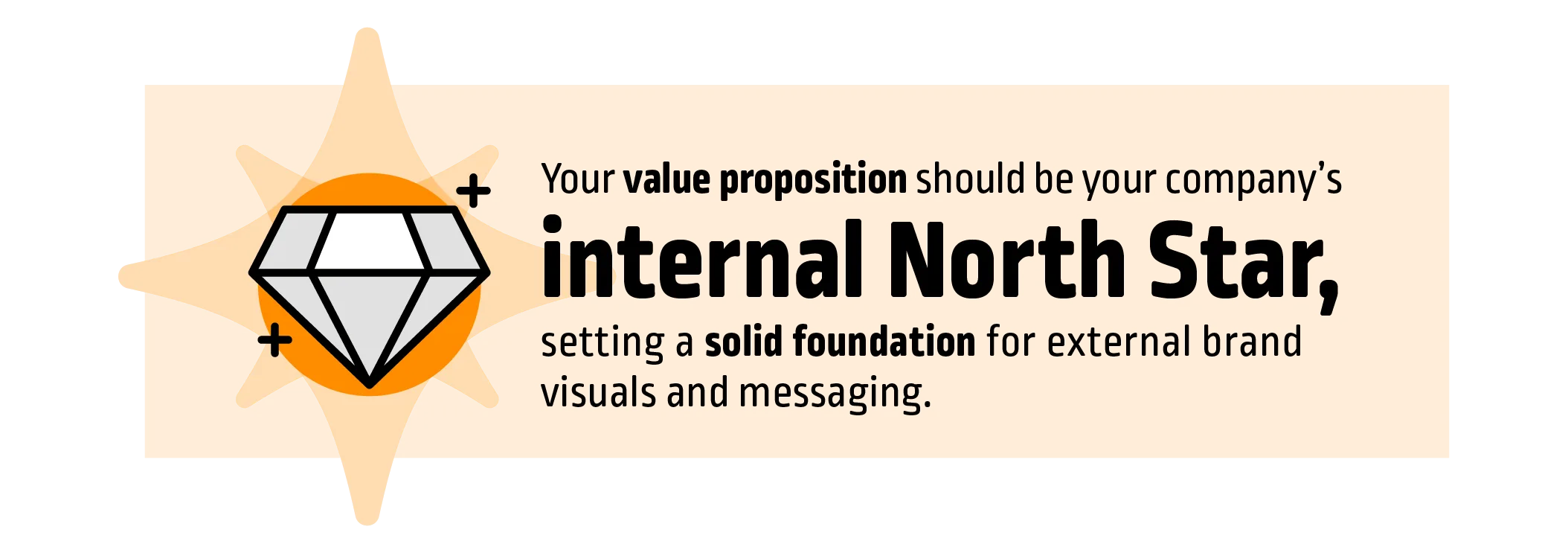
How to Fix or Avoid an Unclear Value Proposition
Start with your audience’s pain points. In other words, what problems are they trying to solve? Your value proposition should clearly articulate how you solve those problems — without listing features.
Use a crisp, benefit-driven structure:
- What do you do?
- Who do you serve?
- What specific outcome do you deliver?
- Why are you better or different?
- What’s the proof or reason for your audience to believe your claims?
For the love of lead gen, please avoid generic claims like “quality,” “flexibility,” or “innovation” unless you can prove them or link them to a real differentiator.
#2 Generic Branding
You’re not building brand awareness unless you stand out. Countless life science brands look and sound the same, with conservative color palettes, clinical-sounding headlines, stock graphics, and vague messaging. (That’s why you’ve heard our team speak about “the sea of sameness.”)
If you can swap your company’s name with a competitor’s and a statement or visual still works, your life science branding lacks differentiation.
In a relationship-driven industry, memorability is momentum. A generic brand forces your business development (BD) team to:
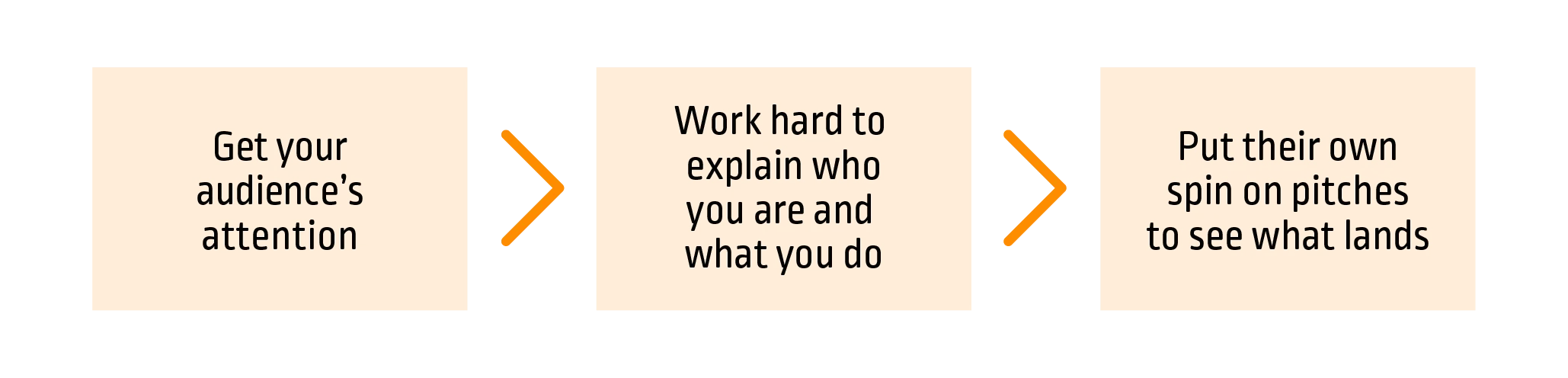
… over and over again.
How to Fix or Avoid Generic Branding
First, define the Big Idea using your value proposition as guidance.
Next, remember to be bold but strategic. Distinct branding doesn’t mean flashy or gimmicky. It means having a clear, unique point of view, leveraging competitive gaps, and expressing it consistently.
Finally, embrace storytelling. Highlight real people, real patients, or real outcomes to humanize your brand and make it more memorable. After all, your target audience is made up of people — and people love stories.
#3 Inconsistency
We are constantly bombarded by campaigns, one-off concepts, and brands. You need to make it as easy
as possible for your audience to recognize and remember you and give them plenty of opportunities to
do just that.
In life sciences, trust is everything. And trust is built through repetition. Inconsistency signals a lack of alignment, attention to detail, or credibility — all red flags in our high-stakes industry.
The life sciences industry also has long sales cycles, which is all the more reason to consistently expose your target audience to your brand. Misalignment between your marketing and your BD team weakens impact. If your core messaging or visual identity shifts depending on who’s speaking, your brand loses power.
How to Fix or Avoid Inconsistency
Inconsistency is one of the most common pitfalls, but it’s also one of the easiest to fix.
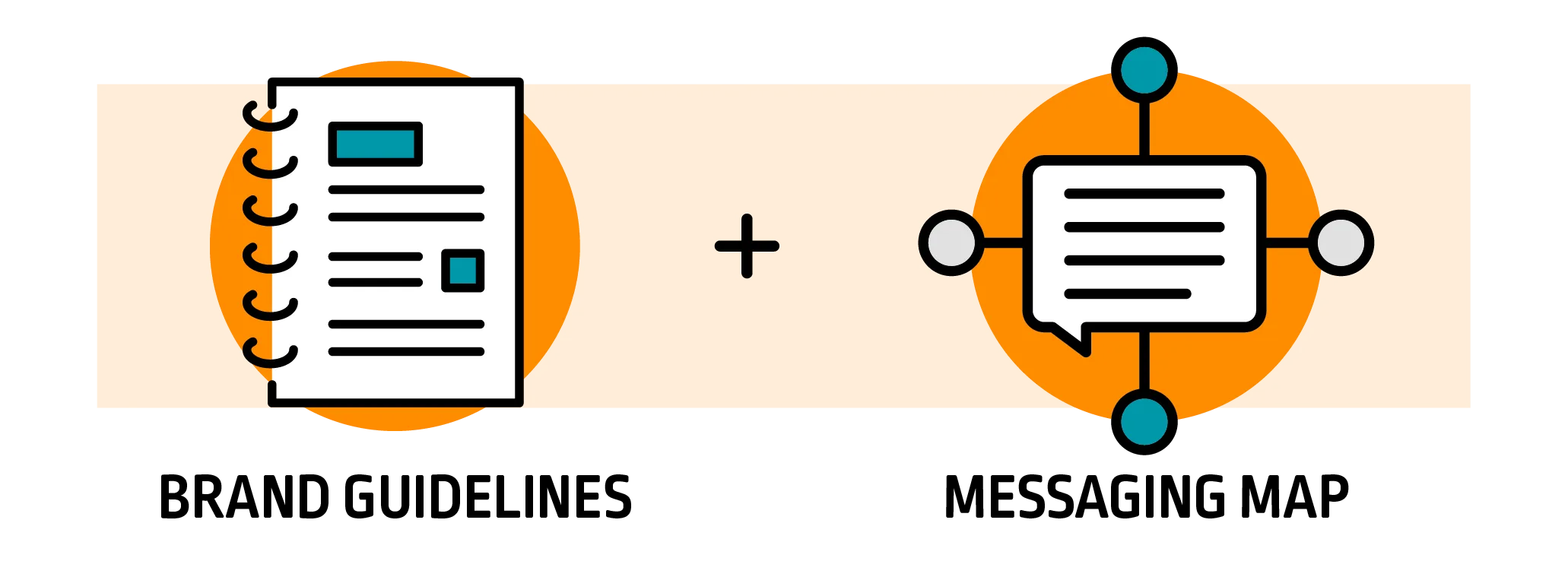
There are two main tools you can use to fix inconsistency. First are brand guidelines.
This is your brand bible, covering everything from logos, colors, and fonts to tone of voice, key messages, and imagery. Share it widely across teams and vendors to ensure alignment. Templates are also your friends. Create and use branded templates for slides, emails, proposals, and one-pagers to help maintain visual consistency across departments and geographies.
The second is a messaging map that breaks down specific messaging by offering, audience, or persona. This level of messaging detail supports consistency across marketing and BD teams.
#4 Overcomplication
In life science branding, simple is strong. If your audience has to work hard (or at all) to understand who you are and what you offer, they will move on.
If you have too many talking points, you don’t have a clear story. If your website or sales deck tries to communicate everything you do at once, your core message will get lost. Science doesn’t sell itself. Your audience needs simplicity and relevance, not a data dump.
How to Fix or Avoid Overcomplication
Focus on what your audience cares about most — what keeps them up at night — before explaining how you solve it. Value supersedes features every time.
Plain language is also powerful. Translate your science or services into clear, human terms your audience can grasp quickly. Then, set up a messaging map with variations by audience who might need more or less detail. Lastly, use design to clarify, not decorate. Your visuals should reinforce meaning and simplify communication, not distract.
#5 Changing Your Brand Too Often
Brand equity is built through consistency over time. Every time you change your look, tone, or messaging without an apparent reason, you dilute that equity.
Recognition drives recall and recall drives revenue.
Buyers need repeated exposure to make a decision. Changing your brand frequently resets that cycle, costing you time and traction. A strong brand is a multiyear investment that increases your company’s value. It can evolve as needed to align with changes in your customer challenges and your benefits, but until your business goals or offerings change entirely, a rebrand is not necessary.
How to Fix or Avoid Changing Your Brand Too Often
Around the time you start getting bored with your branding, it’s just starting to resonate with your audience. You need to fuel your brand so it can be seen and heard in the right place and at the right time. In other words, you need to let your brand nurture!
If you must update, do it strategically and with a clear goal. Or just evolve. Keep your brand fresh with campaigns that use your visuals and messaging in slightly different ways.
Strengthen Your Life Science Branding
Avoiding these branding mistakes is key to building trust and accelerating lead generation. But if you want to stand out and spark tangible results, you also need to WOW.

Krystle Buntemeyer